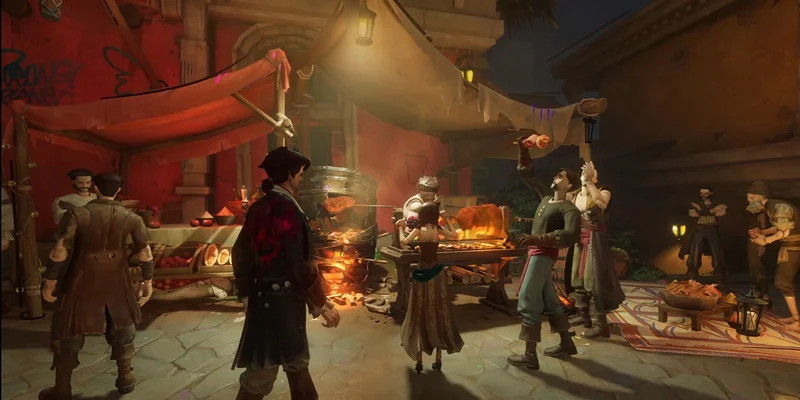
- Sea of Remnants weapons: No official weapon roster or weapon statistics are confirmed in the available material.
- Current focus: Prepare adaptable loadout plans instead of chasing unverified names, tiers, or damage values.
- Trailer signal: The official first-look trailer presents a pirate-focused ocean fantasy setting and combat atmosphere.
- Beta timing: Dawnbreaker Closed Beta begins on December 3, 2026, while the full release is planned for 2027.
- Best practice: Record weapon behavior during testing and separate confirmed beta data from speculation.
Sea of Remnants weapons: Confirmed Information
The Sea of Remnants weapons topic is still developing because the game is in its pre-release period. The available first-look trailer establishes a pirate adventure built around open-sea travel, freedom, treasure, and combat, but it does not provide a reliable weapon list, names, damage values, rarity tiers, or confirmed weapon classes.
That distinction matters for wiki readers. A useful preparation guide should explain what can be confirmed, what remains unannounced, and how to evaluate equipment when testing begins. Avoid treating cinematic visuals as proof of a finalized arsenal. Weapon models, attack animations, and combat systems may change before the closed beta or the planned 2027 launch.
Video Highlights:
- Pirate-themed exploration across a large ocean setting
- A strong focus on adventure, freedom, treasure, and seafaring
- Combat-focused imagery without confirmed weapon statistics
- A visual foundation for planning flexible early loadouts
The trailer should be used for atmosphere and broad theme recognition only. It does not confirm weapon names, attack ranges, damage numbers, rarity levels, or a final tier list.
The current evidence supports a cautious editorial position:
| Information Area | Current Status | Practical Meaning |
|---|---|---|
| Weapon names | Not officially confirmed in the supplied material | Do not publish a definitive roster |
| Weapon statistics | Not available | Avoid damage, speed, range, or scaling claims |
| Weapon rarity | Not confirmed | Do not label equipment as common, rare, epic, or legendary |
| Combat theme | Pirate and ocean-fantasy presentation | Prepare for flexible close, ranged, or utility roles without naming them as confirmed |
| Testing window | Dawnbreaker Closed Beta begins December 3, 2026 | Beta observations must be labeled as test-period data |
| Full release | Planned for 2027 | Launch information may differ from closed-beta behavior |
The most reliable approach is to maintain a clear separation between confirmed information, beta observations, and community speculation. That structure will keep future weapon guides accurate as official details become available.
How to Evaluate an Unknown Weapon Pool
Until the developers publish a complete equipment overview, use a behavior-first system. Instead of asking which weapon is strongest, first identify how each option affects movement, target selection, resource use, and team responsibilities. This method remains useful even if names, models, or balance values change during testing.
A flexible evaluation should record five basic properties:
- Effective range: Where the weapon performs consistently
- Attack rhythm: Whether it favors quick strikes, charged attacks, or controlled bursts
- Mobility impact: How easily the user can reposition while attacking
- Resource pressure: Ammunition, cooldowns, stamina, durability, or another cost
- Team purpose: Damage, defense, control, support, or exploration utility
Do not assign a tier ranking from a single encounter. A weapon that performs well against one target type may be less practical in group battles, shipboard encounters, or exploration events. During testing, evaluate equipment across multiple situations and record the conditions for each result.
Range
Identify the distance where attacks remain reliable. Note whether close targets create a disadvantage.
Tempo
Record attack speed, recovery time, charge windows, and how easily missed attacks can be punished.
Mobility
Test movement before, during, and after attacks. A strong option may lose value if it limits repositioning.
Role
Decide whether the weapon supports damage, defense, control, support, or general exploration.
| Evaluation Category | Questions to Record | Why It Matters |
|---|---|---|
| Reach | Does the weapon work at close, medium, or long distance? | Determines positioning and target access |
| Tempo | Are attacks quick, delayed, charged, or cooldown-based? | Reveals whether mistakes are easy to recover from |
| Movement | Can the user dodge, turn, or retreat during attacks? | Affects survivability and encounter control |
| Reliability | Does performance depend on perfect timing or narrow hitboxes? | Separates consistent tools from specialist options |
| Team value | Does it help allies or only increase personal damage? | Important for group combat and coordinated crews |
For future tier lists, use version labels such as Dawnbreaker Closed Beta or a later official build number. Never combine early test observations with launch rankings without explaining the difference. A closed-beta weapon may be adjusted, removed, renamed, or rebalanced before 2027.
Record the build date, encounter type, target behavior, upgrade state, and team composition whenever you evaluate a weapon. This makes later comparisons far more dependable.
Step-by-Step Loadout Preparation
A practical loadout process should remain useful even when the final arsenal is unknown. The following workflow is designed for the first testing sessions, when players may have limited information and balance changes may occur frequently.
Choose a Primary Combat Purpose
Start with one clear objective: sustained damage, close-range pressure, safe ranged attacks, defense, control, or team support. Do not attempt to cover every role with one weapon before understanding the available systems.
Test One Variable at a Time
When comparing two weapons, keep the target, encounter difficulty, upgrades, and party setup as similar as possible. Changing multiple variables makes the result difficult to interpret.
Record Behavior Before Rankings
Write down attack timing, range, recovery, movement restrictions, and resource costs before assigning a quality rating. Descriptive notes are more useful than an early S-tier label.
Build a Backup Option
Prepare a second weapon or alternative combat plan for situations where the primary choice struggles. A backup should solve a different problem rather than duplicate the same role.
Recheck After Balance Changes
Repeat important tests whenever the beta build changes. Mark old conclusions as historical rather than presenting them as current launch guidance.
The first session should prioritize familiarity over optimization. Learn how attacks connect, how characters reposition, and how encounters reward patience or aggression. Early testing is also the right time to identify controls that feel comfortable for longer exploration sessions.
| Test Phase | Main Goal | Record |
|---|---|---|
| Familiarization | Understand basic attack behavior | Range, timing, recovery |
| Comparison | Find differences between options | Damage pattern, mobility, resource use |
| Encounter testing | Check performance under pressure | Survival, crowd control, target access |
| Group testing | Measure team contribution | Role overlap, support value, coordination |
| Retesting | Confirm results after updates | Build number, changed behavior, new limits |
Any weapon performance recorded after December 3, 2026 should be labeled as Dawnbreaker Closed Beta data unless an official source identifies a different build or test phase.
When publishing personal notes, use language such as “performed consistently in this test” rather than “is the best weapon.” That phrasing communicates useful evidence without turning a temporary result into a permanent claim.
Loadout Planning for Different Situations
A weapon’s value depends on the encounter. Sea of Remnants is presented as an ocean-fantasy RPG with sailing, adventure, treasure, and pirate-city themes, so future combat may involve more than a single stationary target. The exact systems remain unannounced in the available material, but a scenario-based framework can still help organize testing.
| Situation | Preferred Trait | Secondary Trait | Avoid Assuming |
|---|---|---|---|
| Open exploration | Flexible range | Reliable movement | That one weapon suits every encounter |
| Close pressure | Fast recovery | Defensive option | That high damage guarantees safety |
| Group encounter | Area coverage or control | Team utility | That personal damage is the only measure |
| Difficult target | Consistent uptime | Safe repositioning | That a slow attack is automatically stronger |
| Crew-based play | Clear role identity | Low overlap with allies | That duplicate roles always improve a team |
Use these scenario questions when the combat systems become available:
- Can the weapon maintain pressure while the target moves?
- Does its strongest attack create a dangerous recovery window?
- Can the user disengage without abandoning the team?
- Does the weapon require a specific upgrade path to function well?
- Is its value different in solo and group encounters?
- Does the weapon remain useful during exploration, or only in combat?
A balanced loadout normally includes a primary answer and a contingency plan. For example, a player may prefer an aggressive option for ordinary encounters but keep a safer alternative for unfamiliar bosses or crowded areas. This does not require a confirmed class system or specific weapon category; it is simply a way to reduce dependence on one untested strategy.
The strongest early setup is usually the one that covers your weaknesses. Pair your preferred attack pattern with a backup plan for range, mobility, defense, or crowd pressure.
The table below can guide early personal ratings without pretending to provide official statistics:
| Rating | Meaning | Evidence Needed |
|---|---|---|
| Excellent | Reliable across several tested situations | Repeated results in different encounters |
| Good | Strong in a clear role with manageable limits | Consistent role performance |
| Situational | Useful when conditions favor it | Narrow range, timing, or target requirements |
| Unclear | Not enough evidence for a fair judgment | Too few tests or changing beta conditions |
| Unrated | No dependable information available | No confirmed data or usable testing access |
Do not convert “Excellent” into an official meta ranking. These labels are editorial tools for organizing observations, not developer-confirmed balance tiers.
Research Checklist and Frequently Asked Questions
The following checklist is useful before adding a weapon entry to a fan wiki. It helps prevent unsupported details from becoming part of the permanent knowledge base.
Weapon Research Checklist:
- Confirm the information comes from an official announcement or clearly labeled beta observation
- Record the test date and build before documenting performance
- Separate weapon appearance from confirmed weapon mechanics
- Avoid publishing damage, rarity, or tier claims without evidence
- Update or archive findings when the closed-beta build changes
A good weapon page should also identify its evidence level. “Officially announced” is appropriate for a developer-confirmed feature. “Closed-beta observation” is appropriate for tested behavior from the Dawnbreaker period. “Unconfirmed” should be used for speculation, visual interpretation, or community discussion that lacks reliable verification.
For release tracking, the Steam page associated with AppID 3633680 should be checked alongside official announcements. As of November 10, 2026, the site’s reference information identifies December 3, 2026 as the start of Dawnbreaker Closed Beta and 2027 as the planned full-release year. Beta information should not be presented as final launch information.
A closed-beta result is useful, but it is not automatically a launch guarantee. Preserve the build label and date whenever you publish weapon rankings, comparisons, or recommendations.
Q: Are Sea of Remnants weapons officially revealed?
The available material does not provide a confirmed weapon roster, weapon names, statistics, rarity system, or final weapon classes. Use the first-look trailer for broad theme recognition rather than detailed equipment information.
Q: Can I make a Sea of Remnants weapons tier list now?
A definitive tier list is not supported by the available evidence. You can create a personal test framework, but any ranking should wait for playable data and must include the relevant closed-beta or release build.
Q: When should weapon testing begin?
The Dawnbreaker Closed Beta is scheduled to begin on December 3, 2026. Any findings from that period should be labeled as closed-beta data and separated from planned 2027 launch information.
Q: What should I record during weapon testing?
Record range, attack timing, recovery, movement restrictions, resource costs, target performance, team value, build number, and the conditions of each test. This creates a stronger basis for future comparisons.
The best preparation is disciplined documentation. Until official weapon details arrive, focus on transferable evaluation skills rather than rumored names or unsupported rankings. When the beta opens, careful testing will make it easier to identify reliable loadouts while keeping the Sea of Remnants wiki accurate through future updates.
External reference checked on 2026-11-10: Sea of Remnants on Steam.
Related Sea of Remnants Guides
Continue with these Sea of Remnants guides: